Originally published on Substack
We repeat that so often it sounds normal.
It becomes just the rules. If you want to ride tests, gain qualifications, progress through pathways, or be recognised within the sport, you comply. You put the bit in, fasten the bridle, tighten the noseband, and try not to think too hard about what any of it feels like for the horse.
We are told this is simply how organised sport works.
But when participation depends on using equipment that may cause pain or distress, while the rulebook and culture describe that same equipment as natural, neutral, or necessary, something more serious is happening.
This is not just tradition.
It is institutional pressure maintained through linguistic gaslighting.
"Natural aids" and unnatural hardware
On paper, dressage celebrates the natural aids: seat, leg, weight, voice, and hand.
Spurs and whips are openly classified as artificial aids. The bit, however, often slips quietly beneath scrutiny, treated as though it were merely a transparent extension of the rider's hand.
But a bit is not a hand.
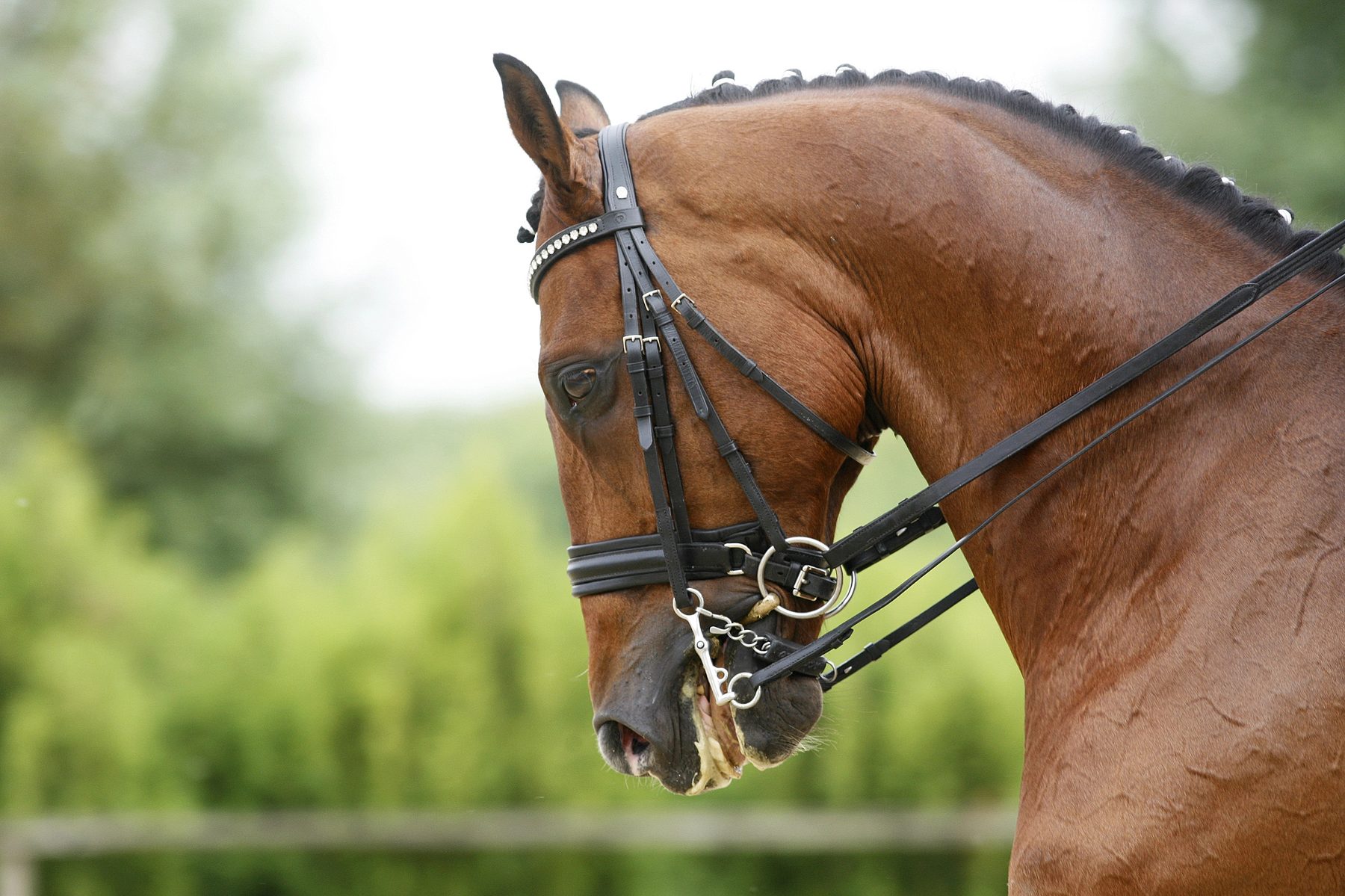
It is a foreign object placed on highly innervated structures: lips, tongue, bars, commissures. It can concentrate pressure, magnify inconsistency, and convert rider instability into oral sensation.
Whatever one's position on bits, they are not neutral objects.
Yet the language surrounding them is relentlessly sanitised.
We are told the horse seeks the bit. That he accepts the contact. That he chews softly. That resistance means he is behind the leg, crooked, tense, or not through.
Mouth opening, tongue evasions, head-tossing, jaw tension, shortening of stride, bracing through the neck — behaviours that may also indicate discomfort — are routinely reframed as training faults.
That is the mechanism of gaslighting.
The horse shows distress, and the system trains us to reinterpret what we see.
When "normal" stops us thinking
Normalisation does the rest.
If you saw a dog in the park controlled by a metal bar in its mouth attached to reins, many people would recoil. If cattle were routinely loaded and steered this way, questions would be immediate.
But with horses, repetition has numbed scrutiny.
Every pony book, every glossy calendar, every Olympic broadcast presents the bitted bridle as standard equipment. The strangeness of placing steel in an animal's mouth and pulling on it has been softened by aesthetics, prestige, and habit.
Normal does not mean harmless. Normal does not mean necessary. Normal simply means repeated until questioning feels impolite.
"Harmless in skilled hands" — whose hands?
Federations often reassure the public that bits are harmless when used correctly, and only as severe as the rider's hands.
That sounds reasonable until we look at how riders actually begin.
Beginners are commonly taught with reins from the first ride. Many are instructed never to let go of them, even on the lunge, often for safety or insurance reasons.
Those hands are not yet educated hands. They are learning hands. Unbalanced hands. Nervous hands. Hands used for stability, steering, braking, confidence, and survival.
And those are the very hands attached to the horse's mouth from day one.
The horse's mouth becomes a handhold while the system continues to describe the arrangement as normal and safe.
There is an old truth in horse sport that exposes the contradiction perfectly:
The only time you are truly qualified to use a bit is when you no longer need one.
By the time a rider has an independent seat, stable posture, and meaningful control through balance, seat, and leg, the bit becomes secondary rather than foundational. The riders for whom a bit may be least problematic are often the very riders who could ride the same work without one.
Yet our rules do the reverse.
We place bits under beginners and make them compulsory at advanced levels, then defend the system with the phrase skilled hands.
When compulsory bits are questioned, the stock response is simple: "If you don't like it, don't compete."
But that ignores how power works.
Federations control competition pathways, accreditation, judging structures, rankings, teams, coaching status, and often the social identity of the sport itself.
For professionals, aspiring professionals, coaches, and serious amateurs, walking away may mean losing far more than a class entry. It may mean losing community, status, income, direction, and years of investment.
That is not the same thing as free choice.
When access to opportunity is conditioned on using a tool you believe may harm your horse, consent becomes constrained. And when your discomfort is met with "it's natural," "it's harmless," or "that's just how it's done," the pressure deepens.
Another path already exists
Some federations have already shown that alternatives are possible.
The Dutch federation permits bitless dressage at multiple levels below Grand Prix. Other countries and organisations run successful bitless competitions and demonstrations.
The sky has not fallen. Safety has not collapsed. Dressage has not ceased to exist.
So when one discipline allows bitless in jumping or eventing, but prohibits it in dressage, what we are seeing is not inevitability. We are seeing preference defended as necessity. And the horse's mouth pays for that preference.
What honest governance would look like
This does not require burning dressage down.
It requires honesty.
Clearly naming the bit as an artificial aid, with real anatomical and welfare education rather than euphemism. Making bits optional rather than compulsory by opening bitless pathways in national dressage. Rewarding welfare-compatible biomechanics: balance, regularity, relaxation, self-carriage, willingness. Separating tradition from evidence, and preference from necessity.
That would create genuine ethical choice.
Those who wish to use bits could do so openly and responsibly. Those who do not would no longer be forced to choose between their horse's mouth and their place in the sport.
The question we keep avoiding
Right now, riders are told compulsory bits are simply normal. That they are natural aids. That they are harmless in good hands. That if they object, they can leave.
But when participation, identity, and opportunity depend on saying yes to something you would otherwise question, that yes is no longer fully free.
Just because something has been normalised inside our ring does not make it harmless, necessary, or ethical.
And it does not mean the rest of the world will accept it forever.